I discovered a new activity: 3D modeling with Nomad Sculpt.
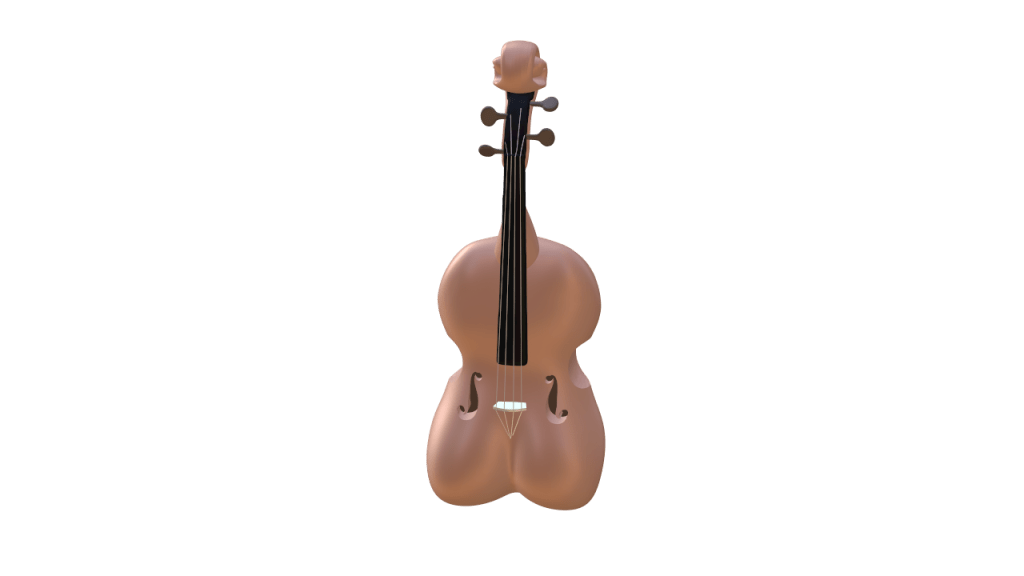
Beautiful.
I discovered a new activity: 3D modeling with Nomad Sculpt.
Beautiful.

For me, languages are everywhere:
So what is language? There are several aspects, I like to list:
One thing all these aspects have in common: the model or the sequence is listening to laws or rules which specify the underlying language. Some examples:
So, not every sequence of perceptible units or so called sentence is part of a language. A language is defined by the set of sentences that are valid within it.
But how to recognize, whether a sentence is in a language? In computer science, the problem is well-understood and can be split into four classes of language groups: the Chomsky hierarchy.
Programming languages are normally in the last two hard classes (worse than O(n^3) where n is the length of input), so language engineers use context-free and regular languages to recognize them and add logic programmatically to validate the resulting models to add the context-sensivity.
Language engineers use finite automata and push-down automata for this job. That is a very theoretical answer. My pragmatic self recommends parser generators like ANTLR for this job. The idea is, why wasting time with programming when you already know the rules? Write down the rules and derive the program!
There is a lot to write about language engineering. Text-to-model transformations are a small piece of the cake called languages. It is an important piece, but there is much more to discover. Remember that the hardest sentence is free of context, like 5+9=145. After recognizing the text you still have to bring in the missing context (the equation is wrong, because 5+9 is 14 and not 145).
There can be model rules like
I hope that I was able to show you what makes language engineering so interesting for me.
 create emotions